
HOLY AND GREAT WEEK
GREAT MONDAY
FAST DAY
March 24/ April 6 ns 2026

The first part of Great Week presents us with an array of themes based chiefly on the last days of Jesus' earthly life. The story of the Passion, as told and recorded by the Evangelists, is preceded by a series of incidents located in Jerusalem and a collection of parables, sayings and discourses centered on Jesus' divine sonship, the Kingdom of God, the Parousia (Theology), and Jesus' castigation of the hypocrisy and dark motives of the religious leaders.
The observances of the beginning of Great Week are rooted in these incidents and sayings. They constitute a single liturgical unit. They have the same cycle and system of daily prayer. The Scripture lessons, hymns, commemorations, and ceremonials that make up the festal elements in the respective services of the cycle highlight significant aspects of salvation history, by calling to mind the events that anticipated the Passion and by proclaiming the inevitability and significance of the Parousia.
The Orthros of each of these days is called the Service of the Bridegroom (Akolouthia tou Nimfiou). The name comes from the central figure in the well-known parable of the ten virgins (St. Matt 25:1-13). The title Bridegroom suggests the intimacy of love. It is not without significance that the Kingdom of God is compared to a bridal feast and a bridal chamber. The Christ of the Passion is the Divine Bridegroom of the Church. The imagery connotes the final union of the Lover and the beloved. The title Bridegroom also suggests the Parousia. In the patristic tradition, the aforementioned parable is related to the Second Coming; and is associated with the need for spiritual vigilance and preparedness, by which we are enabled to keep the divine commandments and receive the blessings of the age to come. The troparion "Behold the Bridegroom comes in the middle of the night…", which is sung at the beginning of the Orthros of Great Monday, Tuesday and Wednesday, relates the worshiping community to that essential expectation: watching and waiting for the Lord, who will come again to judge the living and the dead.
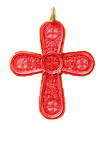
Holy Patriarch Joseph
the All-Comely
• St. Artémon, Bishop of Seleucia;
St. Sábbas the New

The story of Joseph illustrates the mystery of God's providence, promise and redemption. Innocent, chaste and righteous, his life bears witness to the power of God's love and promise. The lesson to be learned from Joseph's life, as it bears upon the ultimate redemption wrought by the death and resurrection of Christ, is summed up in the words he addressed to his brothers who had previously betrayed him, “’Fear not ... As for you, you meant evil against me; but God meant it for good, to bring about that many people should be kept alive, as they are today. So do not fear; I will provide for you and your little ones.’ Thus he reassured them and comforted them” (Genesis 50:19-21). The commemoration of the noble, blessed and saintly Joseph reminds us that in the great events of the Old Testament, the Church recognizes the realities of the New Testament.

Also, on Great and Holy Monday the Church commemorates the event of the cursing of the fig tree (St Matt 21:18-43). In the Gospel narrative this event is said to have occurred on the morrow of Jesus' triumphant entry into Jerusalem. Together with the event of the cleansing of the Temple this episode is another manifestation of Jesus' divine power and authority and a revelation as well of God's judgment upon the faithlessness of the Jewish religious classes.
The fig tree is symbolic of Israel become barren by her failure to recognize and receive Christ and His teachings. The cursing of the fig tree is a parable in action, a symbolic gesture. Its meaning should not be lost on any one in any generation. Christ's judgment on the faithless, unbelieving, unrepentant and unloving will be certain and decisive on the Last Day.
It's clear that nominal Christianity is not only inadequate, it is also despicable and unworthy of God's Kingdom. Genuine Christian faith is dynamic and fruitful. It permeates one's whole being and causes a change. Living, true and unadulterated faith makes the Christian conscious of the fact that he is already a citizen of Heaven. Therefore, his way of thinking, feeling, acting and being must reflect this reality. Those who belong to Christ ought to live and walk in the Spirit; and the Spirit will bear fruit in them: love, joy, peace, patience, kindness, goodness, faithfulness, gentleness, self-control (Galatians 5:22-25).
PLEASE NOTE: Since there is a considerable increase in the number of "readings" each day due to Great Week, they will only be indicated on the blog Title line. Only the Gospel reading will be opened.
Saint Matthew 24:3-35 KJV
3 And as he sat upon the mount of Olives, the disciples came unto him privately, saying, Tell us, when shall these things be? and what shall be the sign of thy coming, and of the end of the world?
4 And Jesus answered and said unto them, Take heed that no man deceive you.
5 For many shall come in my name, saying, I am Christ; and shall deceive many.
6 And ye shall hear of wars and rumours of wars: see that ye be not troubled: for all these things must come to pass, but the end is not yet.
7 For nation shall rise against nation, and kingdom against kingdom: and there shall be famines, and pestilences, and earthquakes, in divers places.
8 All these are the beginning of sorrows.
9 Then shall they deliver you up to be afflicted, and shall kill you: and ye shall be hated of all nations for my name's sake.
10 And then shall many be offended, and shall betray one another, and shall hate one another.
11 And many false prophets shall rise, and shall deceive many.
12 And because iniquity shall abound, the love of many shall wax cold.
13 But he that shall endure unto the end, the same shall be saved.
14 And this gospel of the kingdom shall be preached in all the world for a witness unto all nations; and then shall the end come.
15 When ye therefore shall see the abomination of desolation, spoken of by Daniel the prophet, stand in the holy place, (whoso readeth, let him understand:)
16 Then let them which be in Judaea flee into the mountains:
17 Let him which is on the housetop not come down to take any thing out of his house:
18 Neither let him which is in the field return back to take his clothes.
19 And woe unto them that are with child, and to them that give suck in those days!
20 But pray ye that your flight be not in the winter, neither on the sabbath day:
21 For then shall be great tribulation, such as was not since the beginning of the world to this time, no, nor ever shall be.
22 And except those days should be shortened, there should no flesh be saved: but for the elect's sake those days shall be shortened.
23 Then if any man shall say unto you, Lo, here is Christ, or there; believe it not.
24 For there shall arise false Christs, and false prophets, and shall shew great signs and wonders; insomuch that, if it were possible, they shall deceive the very elect.
25 Behold, I have told you before.
26 Wherefore if they shall say unto you, Behold, he is in the desert; go not forth: behold, he is in the secret chambers; believe it not.
27 For as the lightning cometh out of the east, and shineth even unto the west; so shall also the coming of the Son of man be.
28 For wheresoever the carcase is, there will the eagles be gathered together.
29 Immediately after the tribulation of those days shall the sun be darkened, and the moon shall not give her light, and the stars shall fall from heaven, and the powers of the heavens shall be shaken:
30 And then shall appear the sign of the Son of man in heaven: and then shall all the tribes of the earth mourn, and they shall see the Son of man coming in the clouds of heaven with power and great glory.
31 And he shall send his angels with a great sound of a trumpet, and they shall gather together his elect from the four winds, from one end of heaven to the other.
32 Now learn a parable of the fig tree; When his branch is yet tender, and putteth forth leaves, ye know that summer is nigh:
33 So likewise ye, when ye shall see all these things, know that it is near, even at the doors.
34 Verily I say unto you, This generation shall not pass, till all these things be fulfilled.
35 Heaven and earth shall pass away, but my words shall not pass away.


No comments:
Post a Comment